I’m not an optimist by nature. I really have to work at it. Because it doesn’t come naturally, I set little rules for myself that remind me in a particular situation not to go with my ingrained pessimism, but to operate from the standpoint that improbable things happen every day.
One of my fast rules is not to give up without trying. There are many things each of us wants every day, we sort them into piles of “unlikely to reach” and “likely to reach” and discard the first pile, pursuing only the second. This works great, as it conserves a lot of energy. We simply don’t put time and effort into things that have little chance of succeeding.
But it also means that we let go of a lot of opportunities that might not be as improbable as we think. Optimists will see most things as “likely to reach.” Pessimists will see most things as “unlikely to reach,” and won’t even try, to avoid wasting time and energy and looking foolish.
I recently went through the self-checkout of a major store chain. I asked for $20 back from the machine as I paid. Then promptly forgot to take my $20. I realized this the next day when I opened my wallet and found only a few quarters rolling around on the bottom. Now, I knew I had about as much chance as a helium balloon at a porcupine family reunion. I knew if I went back to ask if anyone turned in a twenty, the checkout person would think I haven’t taken my pills in the morning.
But a rule is a rule. I will not give up without trying. So I went down to the store and asked the checkout person. Yep, she gave me the look. Then she told me to talk to the Customer Service person. I rehashed my story once again, subjecting myself to even more embarrassment. She told me I had to talk to the manager who would tally up the register for the previous day. If anyone turned in my twenty, they’d have a surplus. An hour later, I got my $20 back. “So someone turned in my $20?” I asked, eyes wide, surprised beyond belief. “No.” The manager laughed. “But I’m going to take your word for it.”
So, obviously, I’m going to be a life-long customer at this store. And my pessimistic tendencies were firmly defeated. The best part was that I had a young, impressionable mind with me. (Who thought I was nuts for trying.) I so hope the outcome would make her think about the importance of trying for improbable things.
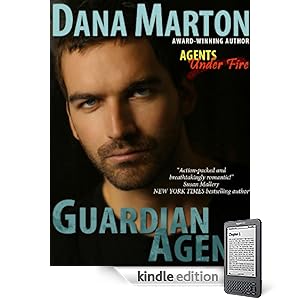
So here I am, at a crossroads with my writing. For the first time ever, I published two of my novellas myself: GUARDIAN AGENT and AVENGING AGENT. (Not to panic, I will keep writing for Intrigue for as long as they let me.) I was pessimistic. I know a few things about writing, but not much about publishing. I know even less about promotion. What if nobody found the books? But I plowed ahead anyway, because these were stories I wanted to tell, and I’m not allowed to give up without trying. And thanks to my wonderful readers, GUARDIAN AGENT is #20 on amazon’s bestselling romantic suspense list. The whole experience has been humbling. I look at that list every morning before I start the day’s work, to remind myself that improbable things happen every day.
Try it!

NY Times and USA Today bestselling author
Sunday, August 14, 2011

Wednesday, June 22, 2011
Kindle/epub
Ebooks are now outselling print books at both Amazon and B&N. And Amazon has its first 1 million-book author who is a self-published author. Wow. Lot's of interesting news!!!
I'm following all this with lots of hope since my first self-published novel just came out with Kindle last week. http://www.amazon.com/dp/B0056NU4BG GUARDIAN AGENT is an international action thriller/romance that's set in Venice. It's getting great reviews so far. I really hope that will translate to sales.
I have to say, I'm hooked on my Kindle. There's a great rush of authors to ebooks right now. I'm very curious how all this will develop and affect the market place of books.
I'm following all this with lots of hope since my first self-published novel just came out with Kindle last week. http://www.amazon.com/dp/B0056NU4BG GUARDIAN AGENT is an international action thriller/romance that's set in Venice. It's getting great reviews so far. I really hope that will translate to sales.
I have to say, I'm hooked on my Kindle. There's a great rush of authors to ebooks right now. I'm very curious how all this will develop and affect the market place of books.
Thursday, May 19, 2011
slow setups
I just read Scarlet Feather by Maeve Binchy, and I have to say, she's the master of a leisurely setup. For the first third of her books, I always wonder, Who are all these people? When is some action going to start? Do I have patience for this? Then for the rest of the book I'm completely enthralled and will stay up until 4 a.m. to finish it. (Which I did last night.)
I write short romantic suspense, where the expectation is to have a body on the floor on page one or at least some serious shooting. Action is the name of the game. I LOVE that as a reader, but sometimes feel rushed as a writer. I would love some time to introduce my characters to the readers until they knew my imaginary people well enough to truly care about them when the bullets start flying. Unfortunately, my genre doesn't have that luxury, although it does have many advantages that I do love.
Anyhow, that's exactly what Maeve Binchy does so well. She makes her readers spend time with her characters, so those characters seem like your best friend and family. When something then happens to them, you are utterly outraged and passionately involved, sitting on the edge of your seat until you finish the book and are assured that everything turned out well.
That is a very neat trick I'm going to remember if I ever start writing longer books!
I write short romantic suspense, where the expectation is to have a body on the floor on page one or at least some serious shooting. Action is the name of the game. I LOVE that as a reader, but sometimes feel rushed as a writer. I would love some time to introduce my characters to the readers until they knew my imaginary people well enough to truly care about them when the bullets start flying. Unfortunately, my genre doesn't have that luxury, although it does have many advantages that I do love.
Anyhow, that's exactly what Maeve Binchy does so well. She makes her readers spend time with her characters, so those characters seem like your best friend and family. When something then happens to them, you are utterly outraged and passionately involved, sitting on the edge of your seat until you finish the book and are assured that everything turned out well.
That is a very neat trick I'm going to remember if I ever start writing longer books!
Thursday, December 9, 2010
Bestseller
Wo hooo, I did it!!! THE SPY WHO SAVED CHRISTMAS is the #1 bestselling Intrigue on Amazon right now. :-)
Okay, so this may only last for 10 minutes but, hey, we all need to grab on to and appreciate life's small pleasures where we find them, right?
On another note, I'm reading IT WAS BE BEST OF SENTENCES, IT WAS THE WORST OF SENTENCES. It's a great little book on writing. Making me wish I could bid on a few hundred more brain cells on eBay. Lots of relative clauses and conjoining conjunctions and whatnot. I usually read it until my eyes are crossed, usally five minutes, then give the rules a day to sink in. Sure makes me wish that I got an English degree back in my college days. But it's never too late to learn. I hope. Still, at the rate I'm going, they're going to have to bury this book with me when I die! :-(
So here is the most important thing I learned from this book so far: Write for the reader, not for yourself. As writers, we tend to fall in love with some of our metaphors and flowery descriptions. Kind of like, "Aren't I clever for having written this?" Readers like simple. They just want to be able to follow the story and know where the heck it's going :-)
Okay, so this may only last for 10 minutes but, hey, we all need to grab on to and appreciate life's small pleasures where we find them, right?
On another note, I'm reading IT WAS BE BEST OF SENTENCES, IT WAS THE WORST OF SENTENCES. It's a great little book on writing. Making me wish I could bid on a few hundred more brain cells on eBay. Lots of relative clauses and conjoining conjunctions and whatnot. I usually read it until my eyes are crossed, usally five minutes, then give the rules a day to sink in. Sure makes me wish that I got an English degree back in my college days. But it's never too late to learn. I hope. Still, at the rate I'm going, they're going to have to bury this book with me when I die! :-(
So here is the most important thing I learned from this book so far: Write for the reader, not for yourself. As writers, we tend to fall in love with some of our metaphors and flowery descriptions. Kind of like, "Aren't I clever for having written this?" Readers like simple. They just want to be able to follow the story and know where the heck it's going :-)
Tuesday, September 14, 2010
Giving a Free Seminar
I'm giving a free seminar at Coffee Time Romance on Project Management for Writers.
http://www.coffeetimeromance.com/board/forumdisplay.php?f=1186
Stop by and see what we're talking about. So far, I posted two lessons:
Lesson #1: Writing is an Art -- Publishing is a Business
Lesson #2: A Goal is a Dream with a Deadline
I love workshops, both taking them and giving them. I learn even when I'm giving one. It's great to review things. And the students always have new/brilliant insights that I never even thought of.
http://www.coffeetimeromance.com/board/forumdisplay.php?f=1186
Stop by and see what we're talking about. So far, I posted two lessons:
Lesson #1: Writing is an Art -- Publishing is a Business
Lesson #2: A Goal is a Dream with a Deadline
I love workshops, both taking them and giving them. I learn even when I'm giving one. It's great to review things. And the students always have new/brilliant insights that I never even thought of.
Friday, September 3, 2010
My favorite books on writing
These are my favorite books on writing, the books that helped me to get published in the first place. However, I just realized that it's been years since I've bought a how-to book on writing and I'm not familiar with the new ones. (I've been writing 4 books per year, reading romances to keep up with current trends etc., which kind of kept me busy.) So if you have a favorite that's not listed here (especially if it's somewhat newer) would you please tell me about it? I'm going to put them on my Santa list :-)
So this is what's on my bookshelf:
•Ansen Dibell: Plot
I found this book immensely helpful and would recommend it to every aspiring author.
•Christopher Vogler: The Writer's Journey
Based on Joseph Campbell's work, written in a more digestible format.
•Debra Dixon: Goal, Motivation & Conflict
A must read.
•Donald Maass: Writing the Breakout Novel
Solid advice from a knowledgeable industry professional. Every writer should read this book.
•Dwight V. Swain: Techniques of a Selling Writer
This is one of my favorites. Solid advice.
•Eve Paludan: Romance Writer's Pink Pages
A wonderful reference book that includes publishers' guidelines and tons of other industry information.
•Joseph Campbell: The Hero with a Thousand Faces
A super book, but not an easy read. Would recommend to advanced writers.
•Julie Checkoway: Creating Fiction
A collection of essays from writers' workshop. Angled toward literary fiction.
•Kathryn Falk: How to Write a Romance and Get it Published
A classic.
•Leonard J Rosen: The Everyday English Handbook
A concise guide to grammar.
•Linda Griffin: The Writer's Guide to Critique Groups
Excellent source, written by an editor.
•Linda Seger: Creating Unforgettable Characters
The title says it all. One of my favorites.
•Linda Seger: Making a Good Script Great
Whether you're writing scripts or novels, I think you'll find this practical guide useful. Full of illustrations from well-known motion pictures.
•Marc McCutcheon: Building Believable Characters
A great guide for beginning writers.
•Margaret Shertzer: The Elements of Grammar
•Noah Lukeman: The First Five Pages
Excellent advice! Take it to heart.
•Noah Lukeman: The Plot Thickens
Lots of exercises to sharpen your fiction.
•R. Browne & D. King: Self-Editing for Fiction Writers
A must for every writer. It will help you make that all-important good first impression on editors.
•Robert McKee: Story
A super book, but not an easy read. I'd recommend it to the advanced writer.
•Sol Stein: Stein on Writing
Would recommend to advanced writers.
•Stephen King: On Writing
A wonderful insight into the life of a mega-author. He has a lot to teach, and it's all in easily digestible, no-nonsense prose.
•Sue Crafton: Writing Mysteries
A collection of essays by top writers of the genre.
•Syd Field: Screenplay
Great for plotting. A classic.
•Valerie Parv: The Art of Romance Writing
A great book for beginning romance writers.
•W. I. Strunk & E.B. White: The Elements of Style
A classic for good reason.
HAPPY READING!!!!
So this is what's on my bookshelf:
•Ansen Dibell: Plot
I found this book immensely helpful and would recommend it to every aspiring author.
•Christopher Vogler: The Writer's Journey
Based on Joseph Campbell's work, written in a more digestible format.
•Debra Dixon: Goal, Motivation & Conflict
A must read.
•Donald Maass: Writing the Breakout Novel
Solid advice from a knowledgeable industry professional. Every writer should read this book.
•Dwight V. Swain: Techniques of a Selling Writer
This is one of my favorites. Solid advice.
•Eve Paludan: Romance Writer's Pink Pages
A wonderful reference book that includes publishers' guidelines and tons of other industry information.
•Joseph Campbell: The Hero with a Thousand Faces
A super book, but not an easy read. Would recommend to advanced writers.
•Julie Checkoway: Creating Fiction
A collection of essays from writers' workshop. Angled toward literary fiction.
•Kathryn Falk: How to Write a Romance and Get it Published
A classic.
•Leonard J Rosen: The Everyday English Handbook
A concise guide to grammar.
•Linda Griffin: The Writer's Guide to Critique Groups
Excellent source, written by an editor.
•Linda Seger: Creating Unforgettable Characters
The title says it all. One of my favorites.
•Linda Seger: Making a Good Script Great
Whether you're writing scripts or novels, I think you'll find this practical guide useful. Full of illustrations from well-known motion pictures.
•Marc McCutcheon: Building Believable Characters
A great guide for beginning writers.
•Margaret Shertzer: The Elements of Grammar
•Noah Lukeman: The First Five Pages
Excellent advice! Take it to heart.
•Noah Lukeman: The Plot Thickens
Lots of exercises to sharpen your fiction.
•R. Browne & D. King: Self-Editing for Fiction Writers
A must for every writer. It will help you make that all-important good first impression on editors.
•Robert McKee: Story
A super book, but not an easy read. I'd recommend it to the advanced writer.
•Sol Stein: Stein on Writing
Would recommend to advanced writers.
•Stephen King: On Writing
A wonderful insight into the life of a mega-author. He has a lot to teach, and it's all in easily digestible, no-nonsense prose.
•Sue Crafton: Writing Mysteries
A collection of essays by top writers of the genre.
•Syd Field: Screenplay
Great for plotting. A classic.
•Valerie Parv: The Art of Romance Writing
A great book for beginning romance writers.
•W. I. Strunk & E.B. White: The Elements of Style
A classic for good reason.
HAPPY READING!!!!
Thursday, August 26, 2010
promotion
What's more important, to write a great book or to have great promotion? What if the two are mutually exclusive? Promotion is taking major time away from writing. PR is definitely my Achilles heel. I don't know how to do it and I don't enjoy doing it. So for the last couple of years, I've all but ignored it. Which is showing up in my book sales.
So over the last few weeks, I had to put away my bestseller project and have been doing promotion instead. I'm now on Twitter and Facebook and even blogging at eHarlequin. (Please find me and friend/follow me. Pleeeaase!) I'm also taking two classes on social networking/PR, one from Beth Barany, the other from Marcia James. I love both. I'm taking copious notes and making lots of plans. And hoping that I'll have the time to put what I learned into practice. Learning about >>meme<< tonight. Well, trying to. My brain is fried and I'm so not getting it. So far, it seems like a virtual chain letter. Will give it another try tomorrow.
If you're a writer, what do you do to promote your books? If you're a reader, what makes you to pick up a book from a writer you haven't read before? Any help would be much appreciated. I'm soooo out of my depth here. Feel like I need to go back to college and get a marketing degree. Unless I win the lottery and can afford to hire a PR manager.
So over the last few weeks, I had to put away my bestseller project and have been doing promotion instead. I'm now on Twitter and Facebook and even blogging at eHarlequin. (Please find me and friend/follow me. Pleeeaase!) I'm also taking two classes on social networking/PR, one from Beth Barany, the other from Marcia James. I love both. I'm taking copious notes and making lots of plans. And hoping that I'll have the time to put what I learned into practice. Learning about >>meme<< tonight. Well, trying to. My brain is fried and I'm so not getting it. So far, it seems like a virtual chain letter. Will give it another try tomorrow.
If you're a writer, what do you do to promote your books? If you're a reader, what makes you to pick up a book from a writer you haven't read before? Any help would be much appreciated. I'm soooo out of my depth here. Feel like I need to go back to college and get a marketing degree. Unless I win the lottery and can afford to hire a PR manager.
Subscribe to:
Posts (Atom)